
What is amyloidosis?
You may have heard the term amyloidosis used by a doctor and been left wondering what it means for you and your life. One of the most common sources of confusion is not knowing that there are different types of amyloidosis, which can develop for different reasons and cause different symptoms. It is important to find out which type of amyloidosis you have to make sure that you receive the most appropriate care and support.
Amyloidosis is the name for a group of rare conditions that develop when abnormal deposits of protein (called amyloid) build up in different organs of the body, preventing them from working properly.

What are proteins?
Proteins are essential building blocks of the body that help make up important parts of our cells, tissues, and organs.
They come in many different shapes and sizes, each specifically structured for its unique role, such as building muscle, supporting the immune system and transporting important substances around the body. Together, they help to maintain normal bodily functions and are essential for the structure, growth, and repair of your body.


Proteins are essential for the body. They act as building blocks to help the body grow, function and repair.
What happens to proteins in amyloidosis?
In amyloidosis, normal proteins break apart into smaller pieces that then misfold, stick together in the wrong shape, and form clumps known as amyloid deposits. Over time, these deposits can build up and cause damage in one or more parts of the body.
When this happens, those body parts cannot work as well as they should, which leads to symptoms of amyloidosis. Common symptoms include:
- Feeling tired or weak
- Unexplained weight loss
- Shortness of breath
- Swollen feet or legs
- Bruising around the eyes
Because these amyloid deposits can occur almost anywhere in the body, other symptoms can also appear and may look different for each person. For example:
- If your heart is affected, you may have a fast or slow heartbeat or chest pain
- If your nerves are affected, you may have pain, numbness, or tingling in your hands and feet
- If your kidneys are affected, you may have pee that looks frothy
- If your digestive system is affected, you may lose your appetite, feel or be sick, have diarrhea or constipation
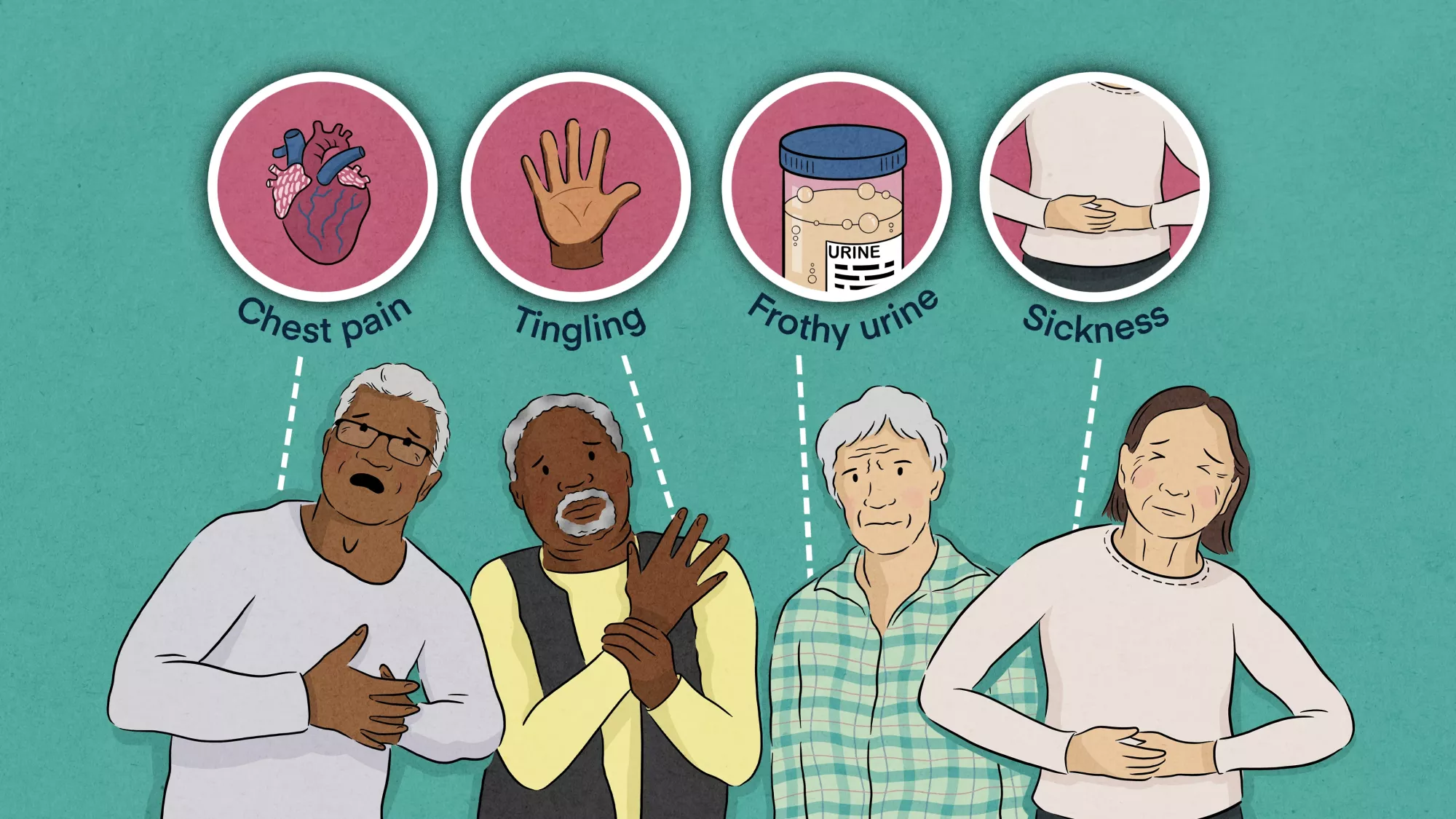
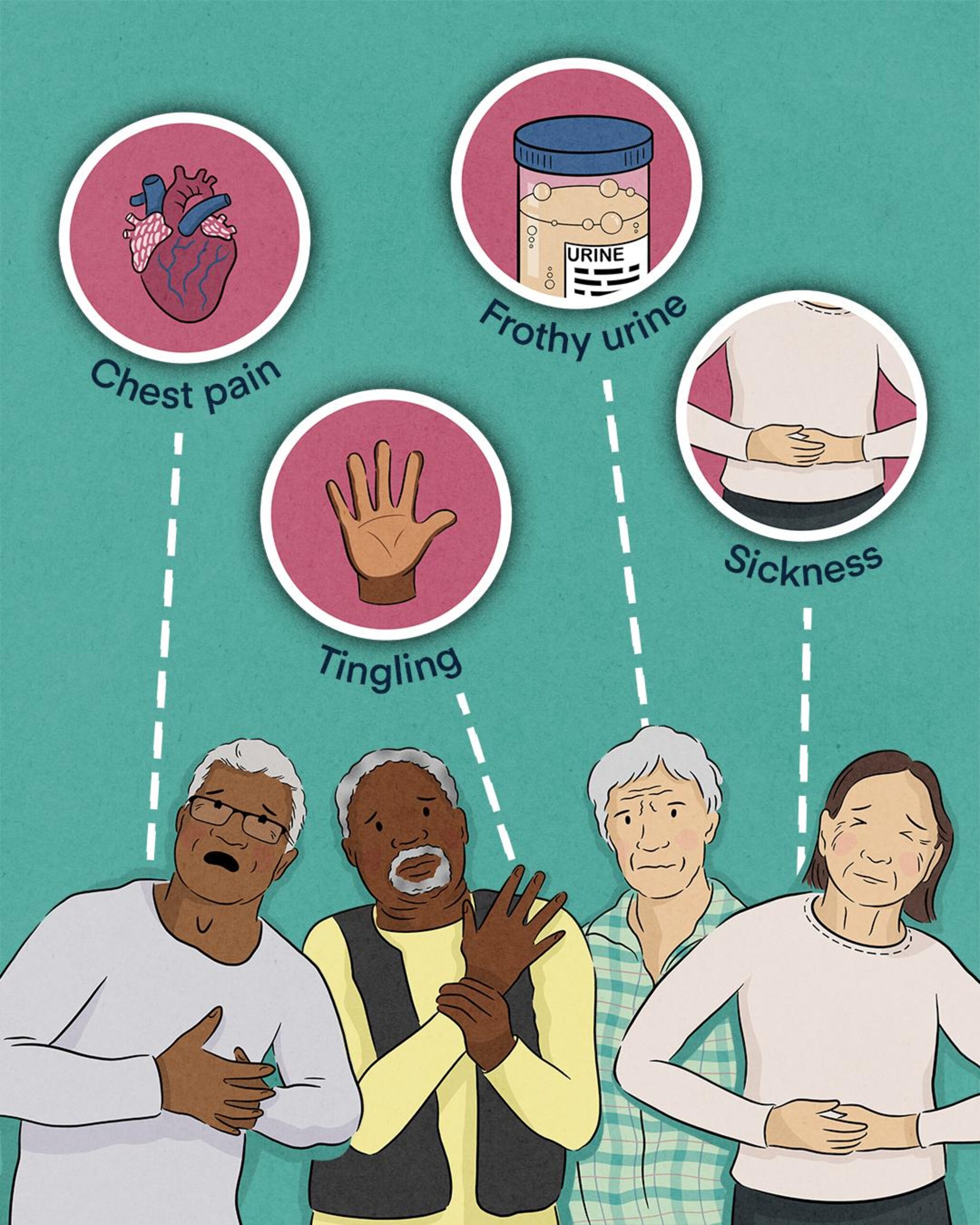
Over time, abnormal proteins (known as amyloid deposits) can build up and cause damage in one or more parts of the body such as the heart, nerves, kidneys and stomach.
Professor Marianna Fontana is a Professor of Cardiology and Honorary Consultant Cardiologist at the National Amyloidosis Centre, London, UK.
Amyloidosis is a broad term, and there are several different types. The three most common types of amyloidosis are AL amyloidosis (amyloid light-chain amyloidosis), AA amyloidosis (amyloid A amyloidosis) and ATTR amyloidosis (transthyretin amyloidosis). Each type of amyloidosis develops for different reasons and can cause different symptoms. Therefore, it is important to find out which type of amyloidosis you have to make sure you receive the most appropriate treatment and support for your condition.
You can learn more about the different types of amyloidosis on the next page.