
Types of amyloidosis
Information about the different types of amyloidosis can feel confusing and overwhelming. As a starting point, it is important to find out which type of amyloidosis you have to make sure you can receive the most appropriate treatment and support for your condition.


What are the different types of amyloidosis?
Your doctor may have mentioned the term amyloidosis, but it is important to know that there are several different types. The three most common types are:
- AL amyloidosis (amyloid light-chain amyloidosis)
- AA amyloidosis (amyloid A amyloidosis)
- ATTR amyloidosis (transthyretin amyloidosis)
Each type is named using the letter “A” for amyloidosis, followed by the letters of the protein that breaks apart, misfolds, and forms amyloid deposits. For example, AL is caused by abnormal light-chain proteins; AA is caused by amyloid A protein; and ATTR is caused by transthyretin protein.
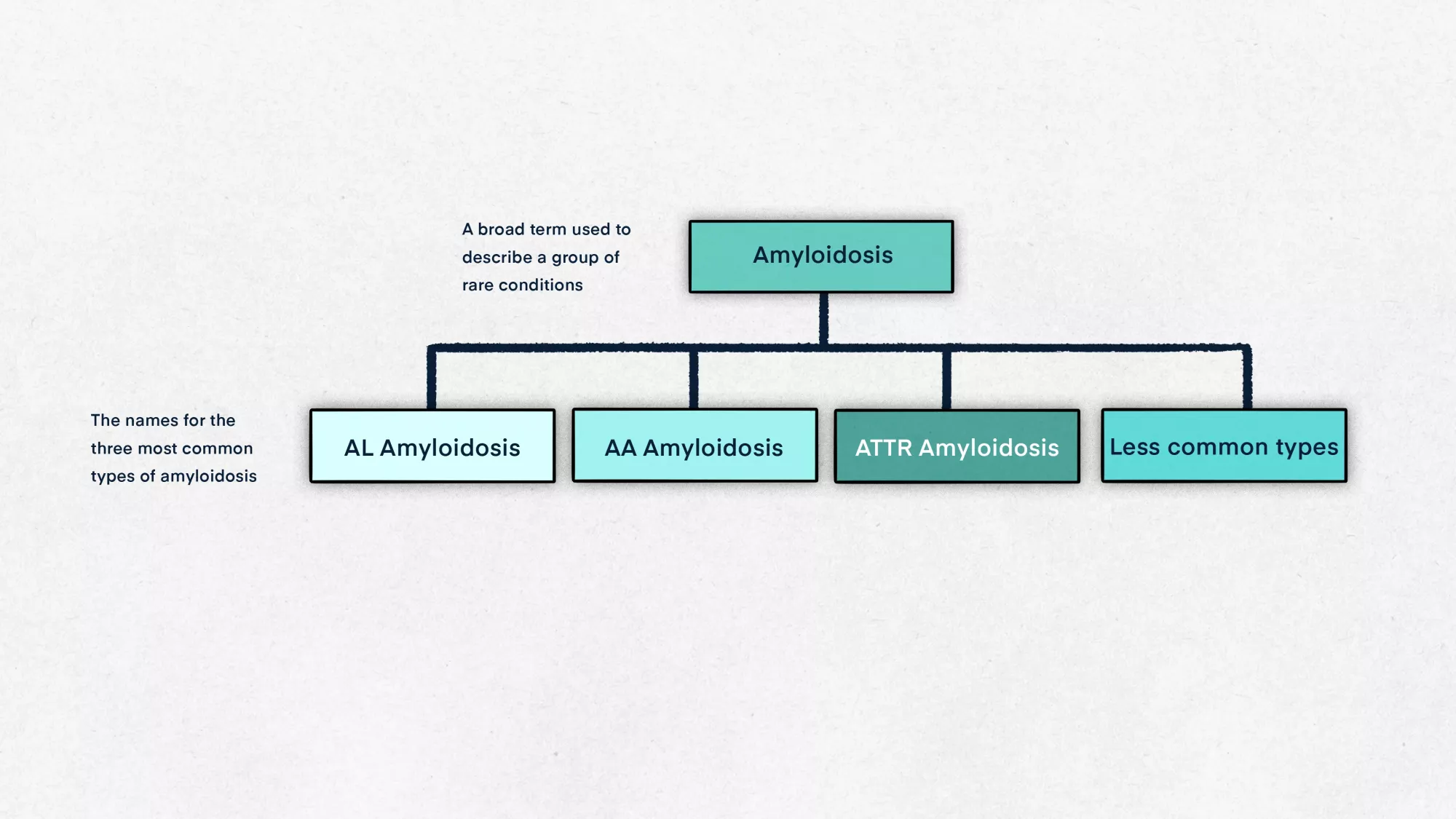
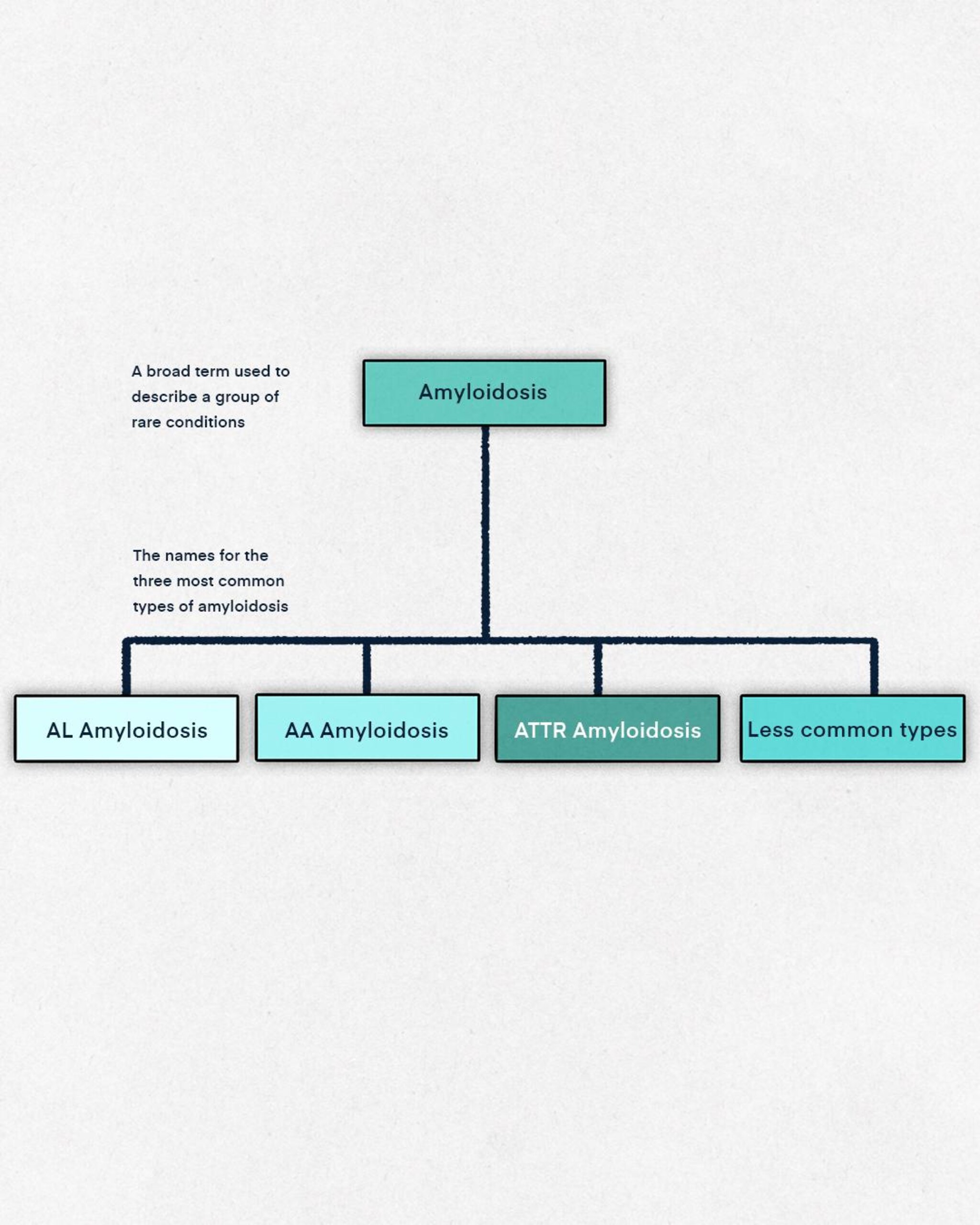
The three most common types of amyloidosis are AL amyloidosis, AA amyloidosis and ATTR amyloidosis.
“A lot of people think amyloidosis is one disease. They don’t realise there’s different types and that’s scary. You feel like you're missing something really important.”
Moderator of online support group
“People hear amyloidosis and they don’t even realise there are different kinds. AL, ATTR, hereditary, wild-type… it’s just a mess for someone hearing it for the first time. Even the doctors use different words.”
Moderator of online support group
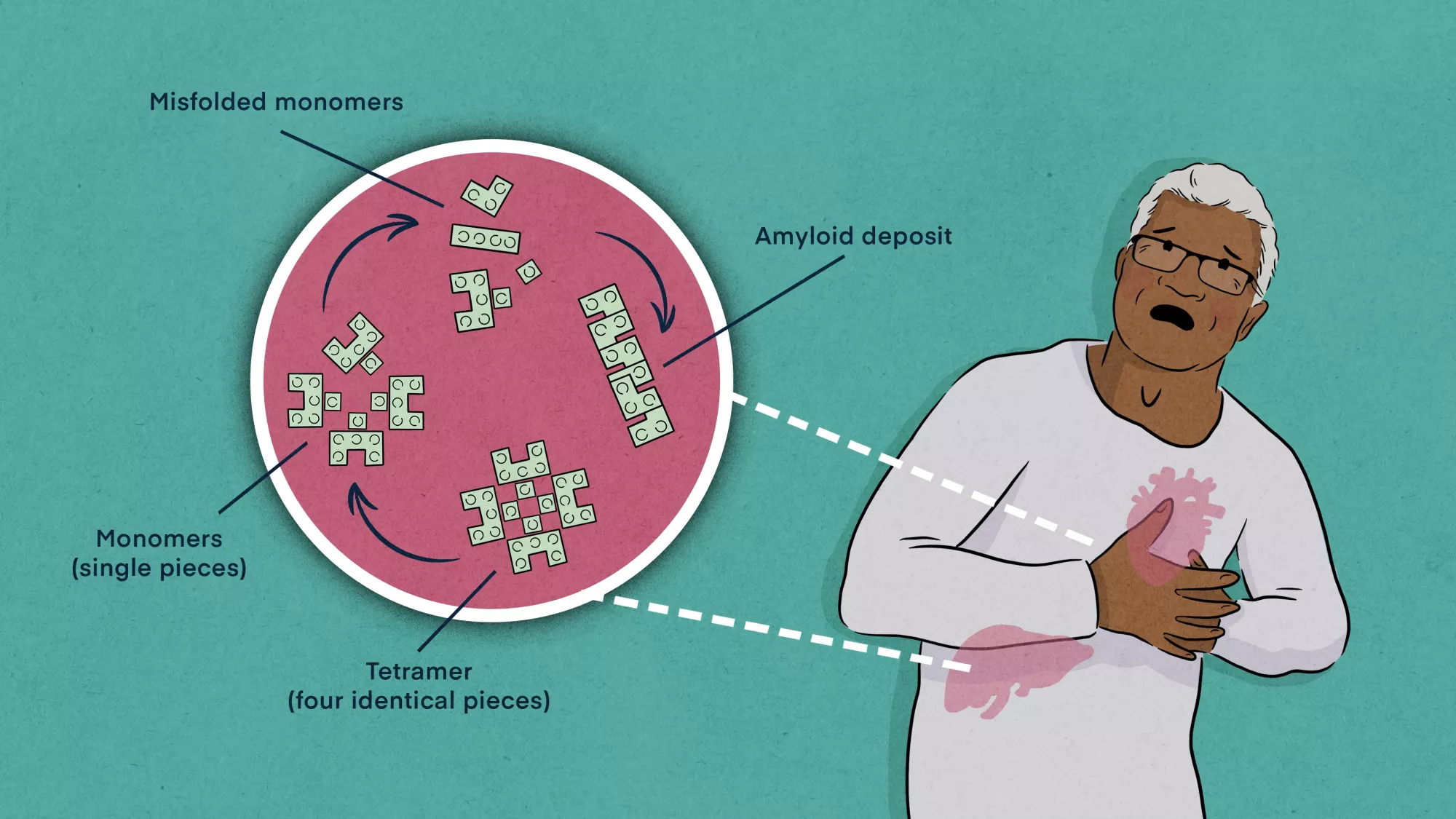
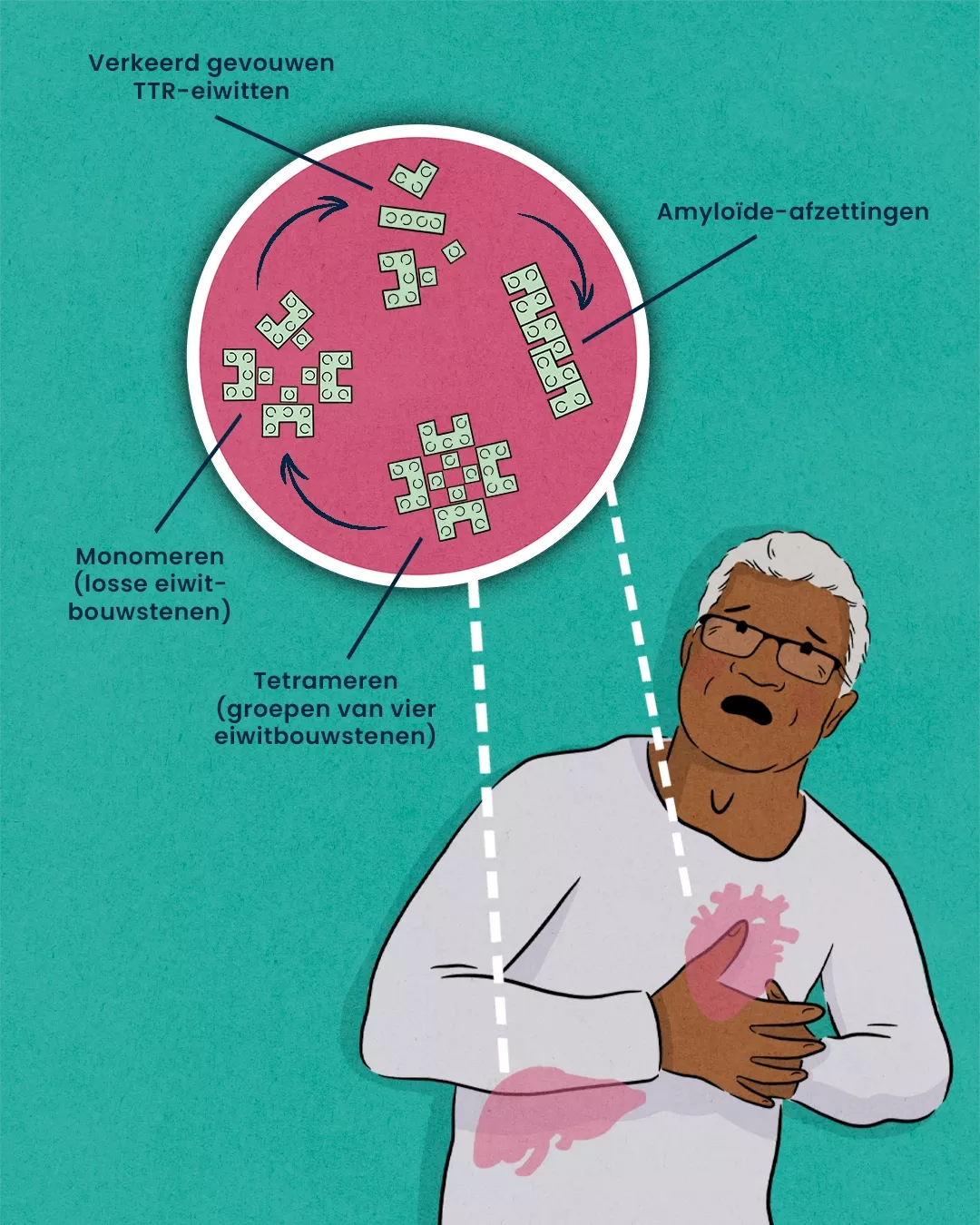
TTR proteins created in the liver travel around the body as a pack of four transporting important substances. In ATTR amyloidosis, this pack becomes unstable and breaks into single pieces that misfold and stick together in clumps (known as amyloid deposits). These deposits can build up in the heart and other organs, preventing them from working properly and causing symptoms like chest pain.
“I wish someone had just sat me down and said, ‘Here’s what ATTR is. Here’s where you fit. You’re not alone.’ That would’ve made a huge difference to my mental health.”
Person living with amyloidosis
Each type of amyloidosis develops for different reasons and can cause different symptoms. Therefore, it is important to find out which type of amyloidosis you have to make sure you receive the most appropriate treatment and support for your condition. There are other, less common types of amyloidosis. Click here to learn more.