
Diagnosing ATTR-CM
There are multiple different tests that help doctors diagnose ATTR-CM, which can feel overwhelming. Learning more about what each test is for could help you to prepare for these checks and understand why they are needed.

How is ATTR-CM diagnosed?
Getting an early diagnosis is very important, as it helps your doctor to decide on the most appropriate treatment and care plan to manage your symptoms and protect your organs. If you have signs, symptoms, or red flags of amyloidosis, your doctor will carry out tests to see if you have the condition, and if so, what type. You can learn more about the red flags of ATTR-CM here.
“I was diagnosed with ATTR-CM a couple of years ago. It took a while to get the right diagnosis.”
Person living with amyloidosis
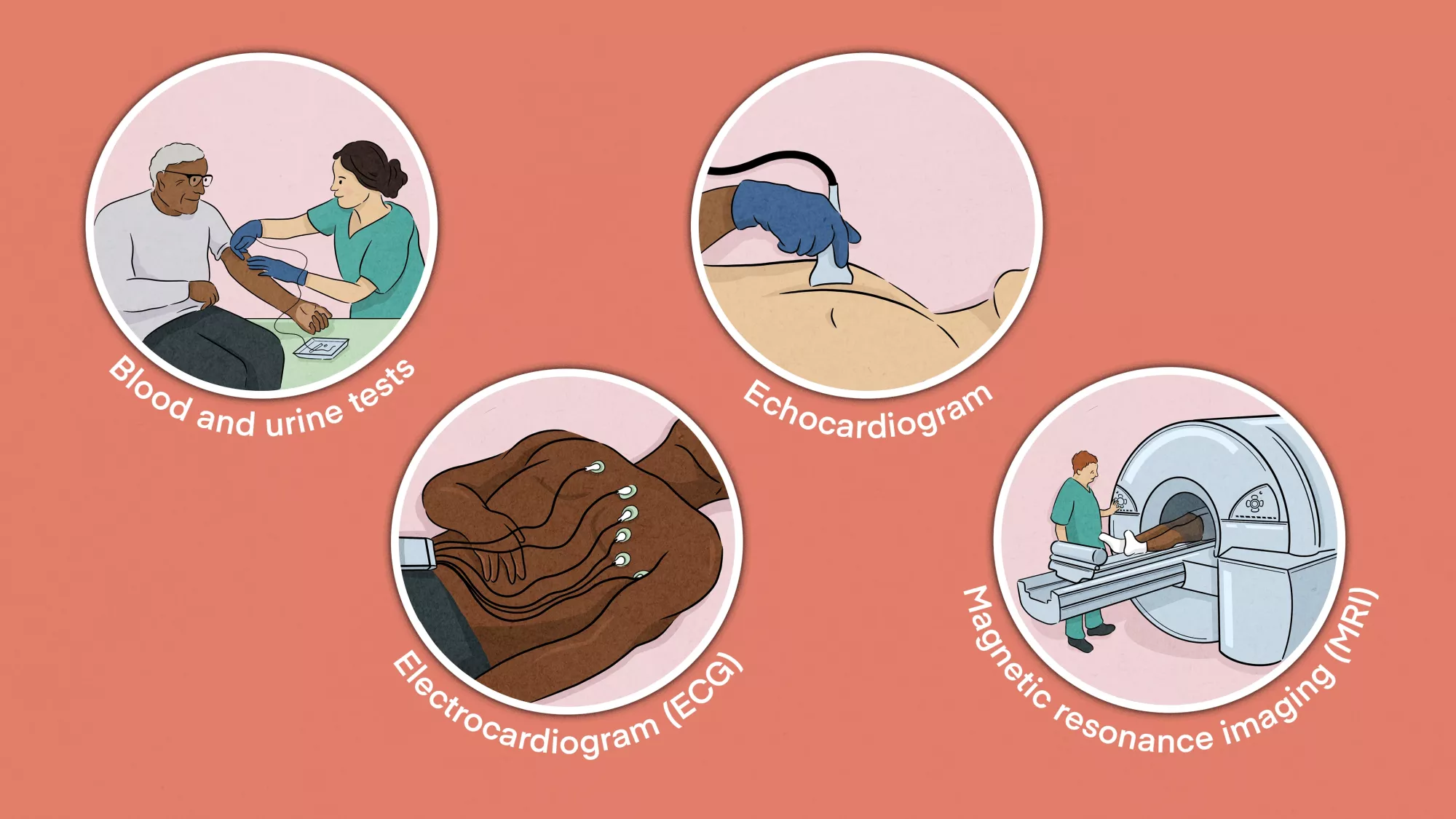
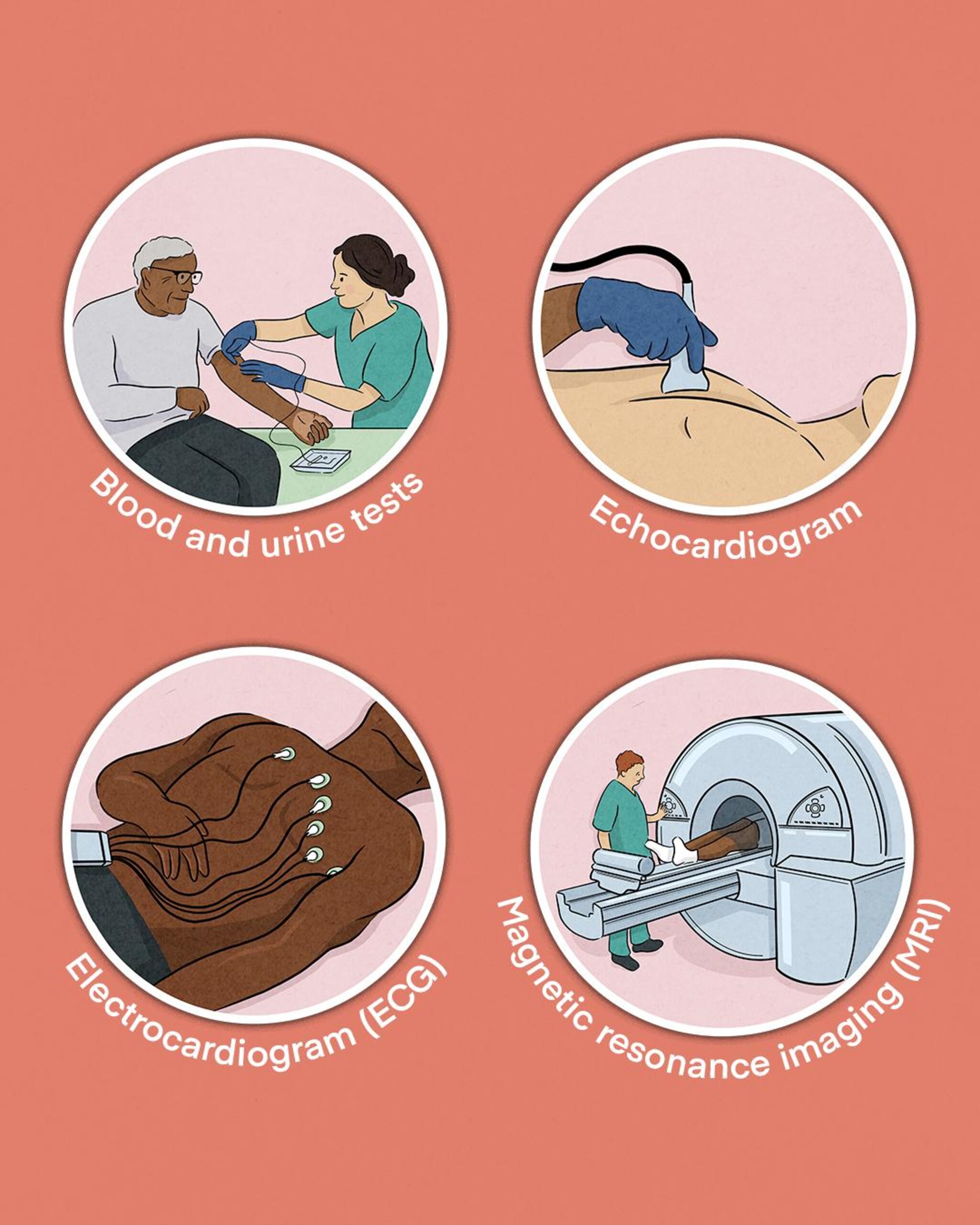
Each test provides different clues that point to ATTR-CM. Blood and urine tests measure protein levels. An ECG can reveal weaker electrical signals in the heart. An echocardiogram can show thickening of the heart walls, while an MRI scan may show scarring or damage to the heart walls.
Pablo Garcia-Pavia is the Head of the Inherited Cardiac Diseases and Heart Failure Unit at Hospital Universitario Puerta de Hierro, Madrid, Spain.


If you are diagnosed with variant-type ATTR-CM, direct family members such as parents, siblings, and children may also carry the gene. Genetic testing can help identify who may need monitoring or care in the future.
“Many people ask what the process is, because they’ve been feeling unwell for a long time and don’t know what it is. They start to suspect it might be amyloidosis and ask how to get diagnosed, and what tests are needed.”
Moderator of online support group
The sooner ATTR-CM is diagnosed, the sooner your treatment can begin. It is important to slow the build-up of amyloid in your heart, protect your organs from further damage, and give you and your family access to the right support and care.
You can learn more about ATTR-CM treatments here.