- Understanding amyloidosis
- Treatment and care with ATTR-CM
- Living with ATTR-CM
- Supporting someone with ATTR-CM
- Further support


Frequently asked questions
Using insights from people living with amyloidosis, caregivers, moderators from online support groups and healthcare teams, we have created this section that includes a list of frequently asked questions (FAQs) from people living with transthyretin amyloidosis (ATTR) as well as a useful guide to commonly used terms and their meanings.
The FAQs are designed to help you better understand the condition and provide support throughout your journey with ATTR, from the moment you first notice symptoms, through diagnosis, treatment, and ongoing care.
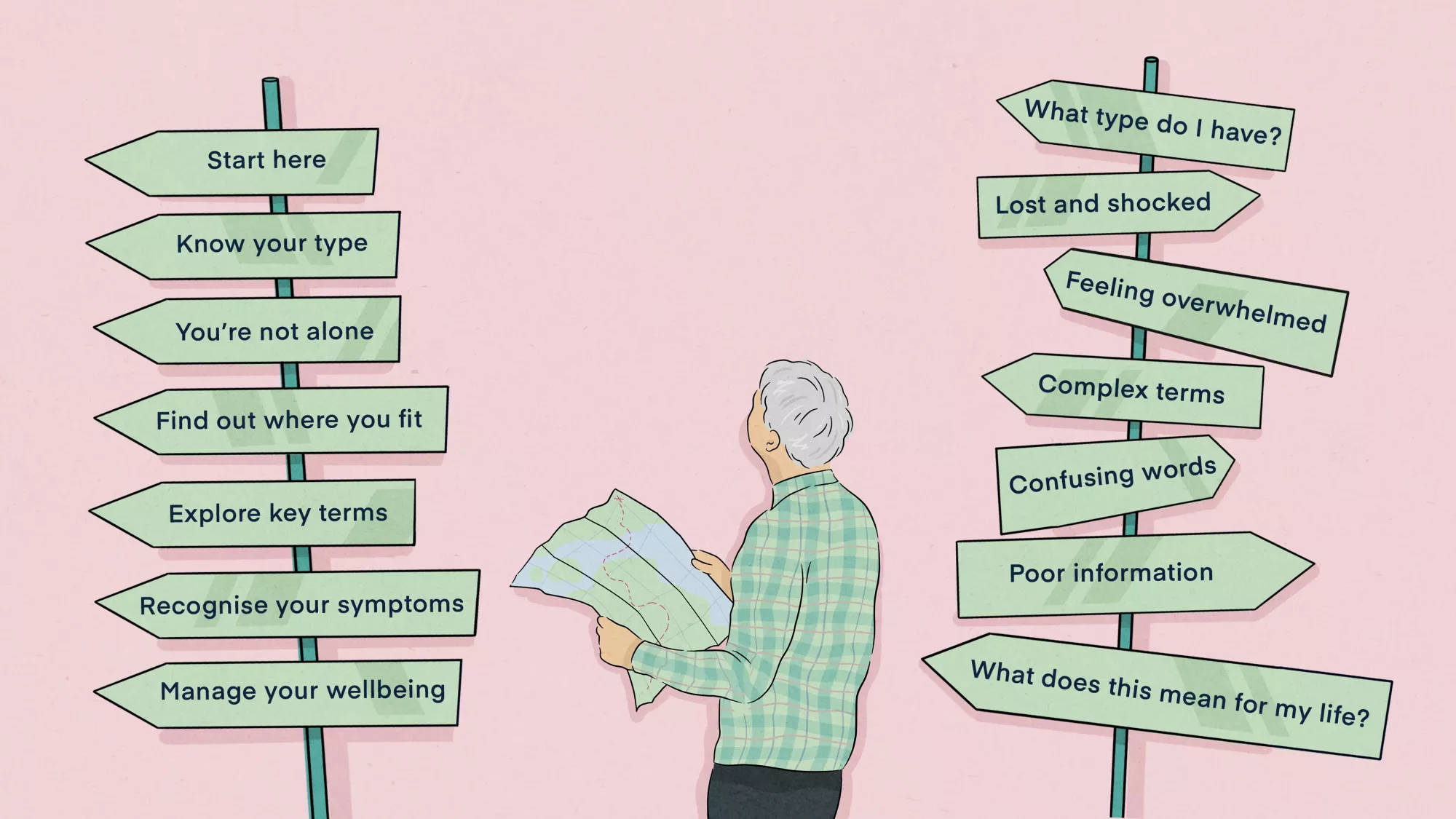
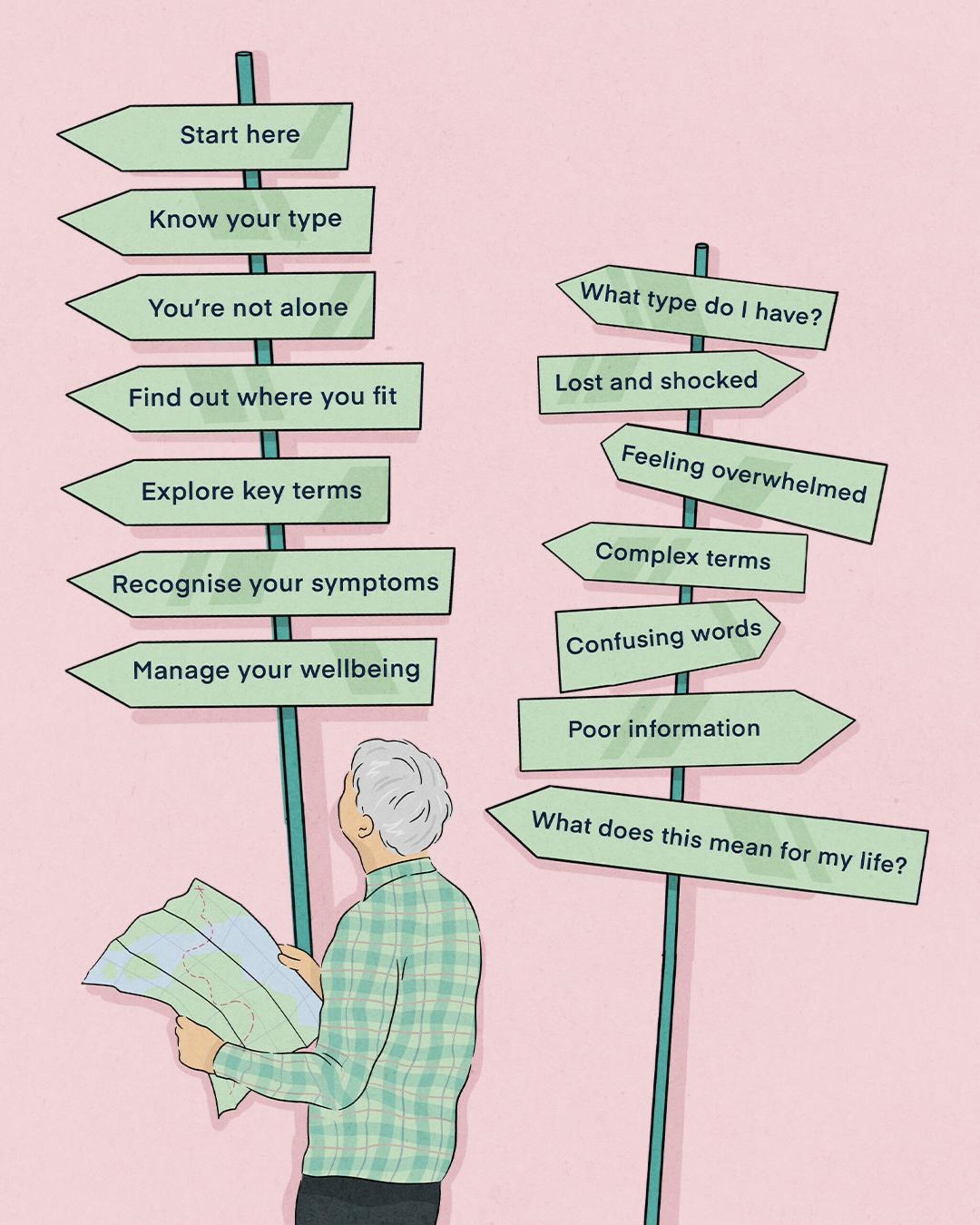
A diagnosis of amyloidosis can bring uncertainty and confusion. Understanding some of the key words and phrases that you have heard and seen is an important start to navigating information and care.
“Everyone uses different terms—doctors, websites, pharma, even patients. We need one way to explain things that’s clear and accessible. And emotional, too—not just clinical. Because this disease affects your head as much as your heart.”
Moderator of online support group
Understanding your condition
- AL amyloidosis (amyloid light-chain amyloidosis)
- AA amyloidosis (amyloid A amyloidosis)
- ATTR amyloidosis (transthyretin amyloidosis)
- Beta-2 microglobulin (β2m) amyloidosis
- Fibrinogen Aα-chain (AFib) amyloidosis
- AApoA1 amyloidosis
- Leucocyte chemotactic factor 2 (LECT2) amyloidosis
- Lysozyme amyloidosis
- Gelsolin amyloidosis
- Cause: the TTR protein breaks apart into pieces, which misfold and form amyloid deposits
- Where it builds up: usually affects the heart and nervous system
- Common symptoms: there are two types of ATTR amyloidosis, which can cause different symptoms.You can learn more here.
- Wild-type ATTR (wtATTR) amyloidosis develops over the course of a person’s life. Natural processes such as getting older can cause the protein transthyretin to become unstable and break apart into pieces, which clump together and form deposits that build up in the body.
- Variant-type ATTR (vATTR) amyloidosis (also known as hereditary ATTR amyloidosis) is passed down the family tree through genes (your DNA). An affected gene can cause the protein transthyretin to become unstable and break apart into pieces, which form deposits that build up in the body.
Amyloidosis is the name for a group of rare conditions that develop when abnormal deposits of protein (called amyloid) build up in different organs of the body. Proteins are essential building blocks of the body that help make up important parts of our cells, tissues, and organs. Together, they help to maintain normal bodily functions and are essential for the structure, growth, and repair of your body.
Over time, these deposits can build up and cause damage in one or more parts of the body. When this happens, those body parts cannot work as well as they should, which leads to symptoms of amyloidosis, such as feeling tired, shortness of breath, or swelling.
Learn more about the symptoms of amyloidosis and the parts of the body it can affect here.
Amyloidosis is not one disease—there are several different types. The three most common types are:
There are also other less common types of amyloidosis, including:
Each type of amyloidosis develops for different reasons, affects different body parts, and can cause different symptoms. Therefore, it is important to find out which type of amyloidosis you have to make sure you receive the most appropriate treatment and support for your condition. To find out more about the different types of amyloidosis, see here.
Transthyretin (shortened to TTR) is a transport protein which is mainly synthesized in the liver. It carries important substances through the blood, including thyroxine (which is a hormone that helps control growth and development) and retinol (which is a type of vitamin A that helps eyesight).
Normally, TTR proteins travel around the body as a pack of four (known as a tetramer - a protein made of four parts), like four building blocks clicked tightly together. In ATTR amyloidosis, this pack becomes unstable and falls apart into single pieces (monomers). These loose pieces can misfold and stick together in the wrong way, forming clumps of amyloid deposits that can build up in the heart and other places, preventing them from working as they should and causing symptoms.
If you have been diagnosed with ATTR amyloidosis (transthyretin amyloidosis), the next step is to find out the cause of your condition. There are two types, depending on how they develop:
It is important for doctors to know whether you have wtATTR or vATTR amyloidosis. If you are diagnosed with vATTR amyloidosis, your family members may need to be tested. Learn more about the types of ATTR here.
If you have been diagnosed with transthyretin amyloidosis (ATTR amyloidosis), your doctor will investigate whether you have ATTR with cardiomyopathy (ATTR-CM) or ATTR with polyneuropathy (ATTR-PN), based on your symptoms and the location of amyloid deposits in the body.
ATTR-CM is a type of amyloidosis that affects the heart. In ATTR-CM, amyloid deposits build up in the heart muscle, causing the heart to become stiff and less able to pump blood to other parts of the body. Over time, this can lead to heart conditions, including an abnormal heartbeat and heart failure (a condition where, over time, the heart becomes less effective in helping blood move properly through the body).
ATTR-PN is a type of amyloidosis that affects mainly the nerves in the hands and feet but may include other parts of the body. In ATTR-PN, amyloid deposits collect around the peripheral nerves. These nerves are like wires that carry information between the brain and spinal cord and the rest of the body, allowing you to respond to your environment (for example, moving your hand away from a hot object). The build-up of amyloid in peripheral nerves can cause damage, which means they gradually lose their ability to work properly.
It is possible for people with ATTR to have symptoms of polyneuropathy and cardiomyopathy, which means they may experience symptoms related to the nerves and the heart. This is known as mixed phenotype ATTR.If you notice symptoms that could be linked to ATTR amyloidosis, you should talk to your doctor, who will carry out tests to see if you have the condition and, if so, what type.
Diagnosis
- Age: ATTR-CM is most common in people over the age of 60
- Heart failure: developing heart failure can increase the chance of ATTR-CM. Heart failure is a condition where, over time, the heart becomes less effective in helping blood move properly through the body
- Family history: having a relative with variant-type ATTR-CM, other heart conditions, or nerve damage can increase the risk of having ATTR-CM
- Certain health conditions: carpal tunnel syndrome, biceps tendon rupture, and lumbar spinal stenosis can be early warning signs of ATTR-CM
- shortness of breath
- tiredness
- weakness
- swelling of the legs
- irregular heartbeat
- dizziness
- Does my family need to be tested for ATTR-CM?
- How can ATTR-CM worsen over time?
- What treatment options would be the most appropriate for me?
There are several early warning signs and symptoms that can be associated with transthyretin amyloid cardiomyopathy (ATTR-CM). Doctors may also use the term “red flags” to describe these.
Red flags for ATTR-CM include:
If you are at risk of ATTR-CM, your doctor will recommend tests that help to diagnose the condition. You can learn more about the early warning signs of ATTR-CM here.
Common symptoms of transthyretin amyloid cardiomyopathy (ATTR-CM) include:
People living with ATTR-CM may also experience additional cardiac symptoms, such as carpal tunnel syndrome (squeezed nerves in your wrist) or spinal stenosis (narrowing of nerves in your spinal cord).
However, it is important to remember that symptoms are not the same for everyone with ATTR-CM. You should monitor your symptoms so that you can tell your doctor how they have changed over time and whether any new symptoms have developed. Consider writing them down, for example, using a logbook or symptom tracker. Click below to download a symptom tracker.
On average, it may take several years for people with early, unspecific symptoms to be diagnosed with wild-type or variant-type transthyretin amyloid cardiomyopathy (ATTR-CM).
The time to diagnosis often differs between males and females. Because the symptoms of ATTR-CM often look like those of more common heart conditions, doctors may not always recognise it right away. This delay is one reason why greater awareness and early recognition of this rare disease are so important.
If you have signs, symptoms, or “red flags” of amyloidosis, your doctor will carry out tests to see if you have the condition, and if so, what type. The sooner transthyretin amyloid cardiomyopathy (ATTR-CM) is diagnosed, the sooner your treatment can begin, which is important to slow the build-up of amyloid in your heart and protect your organs from further damage.
There are different tests that see how well your organs are working and measure the levels of different proteins in your body, helping doctors diagnose ATTR-CM. Find out more about the tests used to diagnose ATTR-CM here.
Being diagnosed with transthyretin amyloid cardiomyopathy (ATTR-CM) can feel overwhelming, so it is normal to have questions. Talking about your thoughts and concerns, and asking questions, will help you and your doctor decide on the care and treatment that best suits your needs and lifestyle.
Some examples of useful questions to ask your doctor include:
To help you prepare for an appointment with your doctor, find a full list of questions that you may want to ask them here.
ATTR-CM symptom tracker
Treatment
- TTR stabilisers are oral (tablet) medicines that keep transthyretin (TTR) protein in its normal shape. By doing so, they stop the protein from breaking apart into pieces. This means fewer amyloid deposits build up in the body, and TTR can continue to do its important job of carrying substances such as vitamin A through the blood
- TTR silencers are injectable medicines that reduce the body’s production of TTR protein. With less TTR being made, less amyloid forms and builds up in organs like the heart or nerves
Once you are diagnosed with transthyretin amyloid cardiomyopathy (ATTR-CM), your doctor will help you choose a treatment plan that is right for you, taking into account your symptoms, the type of ATTR-CM, and your overall health.
Some treatments for ATTR-CM focus on managing the different symptoms, while others have the potential to manage the progression of the disease. Your treatment will match your needs, whether that is to control the effects of heart failure (such as swelling and shortness of breath), manage high blood pressure, regulate an abnormal heartbeat, or address another symptom. As ATTR-CM looks different for each person, your treatment may not be the same as someone else’s. Over the past few years, new treatments have been developed to help slow down the condition from getting worse over time. These treatments work by either preventing the protein from breaking apart or reducing the amount of protein the body produces. In turn, this slows or reduces the build-up of amyloid, helping to protect the heart and keep it working effectively as long as possible.
There are two main types of treatments that help to slow down ATTR-CM: TTR stabilisers and TTR silencers, which work in different ways to reduce the build-up of amyloid deposits in the body:
For some people, organ transplants or medical devices (for example, a pacemaker) may be considered as treatment options.Find out more about how each type of treatment helps to slow down ATTR-CM here.
Treatments can help to protect your heart, reduce symptoms, and help you live well with transthyretin amyloid cardiomyopathy (ATTR-CM). However, they may also cause side effects.
Each treatment option will have its own benefits and risks. Your doctor will advise you on the most appropriate treatment option for your condition and medical history and may provide you with information on how long it may take to notice the effects. To check how well your treatment is working and how your heart is functioning, your doctor will schedule regular health check-ups. By keeping an eye on your condition, your care team of doctors can adjust your treatment plan if needed.
Different treatments work in different ways to slow the progression of transthyretin amyloid cardiomyopathy (ATTR-CM), so you should ask your doctor about what you should expect from your treatment plan.
Not all medications work well together. Some common heart medications can increase side effects for people being treated for transthyretin amyloid cardiomyopathy (ATTR-CM). Therefore, it is important to always check with your doctor before starting a new medicine.
Clinical trials are studies that test new treatments on people living with transthyretin amyloid cardiomyopathy (ATTR-CM) to make sure they work how they should. For example, a trial may explore whether people living with ATTR-CM taking a new treatment show symptom improvement compared to those who have not taken the active treatment.
While clinical trials are critical for the development of new treatments, not every trial is a good fit for every person living with ATTR-CM. To learn more about what it is like to take part in a clinical trial or find a trial that may suit you, talk to your doctor or search trusted websites, such as ClinicalTrials.gov.
Research in transthyretin amyloid cardiomyopathy (ATTR-CM) is constantly progressing.
Genetics & Family
Transthyretin amyloid cardiomyopathy (ATTR-CM) can have a genetic cause, meaning it can be passed down the family tree. Once ATTR-CM is confirmed, doctors will carry out genetic testing to find out whether your ATTR-CM is the variant form (the hereditary type that runs in families) or wild-type (develops later in life and is not inherited).
Genetic testing usually involves taking a blood or saliva sample, which allows scientists to check your DNA to see if you have a gene change linked to variant-type ATTR-CM.
If you are diagnosed with variant-type transthyretin amyloid cardiomyopathy (ATTR-CM), other family members may also be at risk of carrying the affected gene that makes the transthyretin (TTR) protein break apart into pieces and build up in the body, leading to ATTR-CM. Direct family members such as parents, siblings, and children may carry the gene if one individual is affected.
Because of this, your doctor may recommend that some family members consider genetic testing to identify who carries the gene and whether they may need monitoring or care in the future.
It can be challenging to start a conversation with your family about variant-type transthyretin amyloid cardiomyopathy (ATTR-CM) and what your diagnosis might mean for them. Genetic counsellors, doctors, or support groups are available to help guide these sensitive yet important discussions, ensuring that your family members understand their risk of ATTR-CM and undergo the necessary testing.
Living with ATTR-CM
- Maintaining your daily activities, hobbies, and social life
- Moving your body every day
- Eating well
- Following treatment plan
- Managing stress levels
- Practising good sleeping habits
Adjusting to life after a diagnosis of transthyretin amyloid cardiomyopathy (ATTR-CM) may feel challenging at times. You might notice changes in your daily routines, emotional wellbeing, and relationships, as you manage symptoms, start treatment, and attend regular check-ups. But you are not alone. There is support available to help you live well with ATTR-CM.
Learn more about the potential effects of ATTR-CM on your daily life, emotional wellbeing, and your family members and caregivers here. You can hear the journeys of people living with ATTR-CM here.
Transthyretin amyloid cardiomyopathy (ATTR-CM) is a condition that progresses over time. Available treatments cannot reverse the disease, but can help prevent further progression, particularly when the condition is identified early.
Alongside treatment available to help slow down ATTR-CM, lifestyle changes such as eating well and staying active can also help you live a full life for as long as possible.
It is not always easy to tell the difference between symptoms of transthyretin amyloid cardiomyopathy (ATTR-CM) and signs of ageing, for example, feeling tired or short of breath. If symptoms continue for a long time, get worse, or feel different from usual, you should talk to your doctor rather than assuming they are due to ageing.
If you experience chest pain, severe shortness of breath, fainting, or sudden swelling, it is important to seek emergency care.
Having a list of useful contacts, such as your doctor's and caregivers' phone numbers, can help you feel prepared for emergencies and get support quickly.
Being diagnosed with transthyretin amyloid cardiomyopathy (ATTR-CM) is a big change. With support from your healthcare team, caregivers, friends, and family, you can adapt your daily routines and learn how to best manage your condition.
The following lifestyle changes can help you to live well with your condition and keep your heart as healthy as possible:
Learn more tips on managing your ATTR-CM here and learn about simple eating habits that can help support your heart and overall wellbeing here.
Transthyretin amyloid cardiomyopathy (ATTR-CM) is an under recognised condition, so people may not have heard of it. However, it is important to remember that you are not alone.
An expert cardiologist (heart specialist) will support you by explaining your test results, answering your questions, and helping you decide on the best options for your treatment and care. Your cardiologist will work with other specialist doctors and teams to look after your overall wellbeing and support your daily life.Other professionals, such as therapists or counsellors, are also there to help you manage your feelings.
Beyond your team of doctors, you may also find it helpful to join a support group or online communities. These provide an opportunity for people living with ATTR-CM, family members, and caregivers to connect with others who understand what they are going through. There are support groups available across the world for people with ATTR-CM, and many are online, allowing you to join from home. You can find more information about support groups here.
Sharing how you feel with your friends, family, and caregivers can help them understand and support you in managing ATTR-CM and motivate you to carry on living a full and active life. Learn more about the doctors that will be involved in your care here. You can hear the journeys of people who understand what it is like to live with ATTR-CM here.
If you are caring for someone with transthyretin amyloid cardiomyopathy (ATTR-CM), you may find yourself taking on new responsibilities and providing emotional support. It is not easy to watch someone close to you adapt to life with ATTR-CM, and it is natural to feel overwhelmed as you balance their needs with your own.
However, remember you do not need to do everything on your own. Building a support network, knowing when to ask for help, and looking after yourself are important for anyone looking after someone with an illness or condition that requires care.




- 1Bustamante JG, Zaidi SRH. Amyloidosis. In: StatPearls. Treasure Island (FL): StatPearls Publishing; July 31, 2023.
- 2Amyloidosis UK. All About Amyloidosis. Available at: https://amyloidosisuk.org/about-amyloidosis/all-about-amyloidosis/ (Last accessed: March 2026).
- 3NHS. Amyloidosis. Available at: https://www.nhs.uk/conditions/amyloidosis/ (Last accessed: March 2026).
- 4LaPelusa A, Kaushik R. Physiology, Proteins. In: StatPearls. Treasure Island (FL): StatPearls Publishing; November 14, 2022.
- 5NHS England. Proteins. Available at: https://www.genomicseducation.hee.nhs.uk/genotes/knowledge-hub/proteins/ (Last accessed: March 2026).
- 6Law S, Gillmore JD. Am J Med. 2022;135 Suppl 1:S2-S8.
- 7Amyloidosis UK. Types of Amyloidosis. Available at: https://amyloidosisuk.org/about-amyloidosis/types-of-amyloidosis/ (Last accessed: March 2026).
- 8Sidiqi MH, et al. Blood Cancer J. 2019;9(3):30.
- 9Jain A, Zahra F. Transthyretin Amyloid Cardiomyopathy (ATTR-CM). In: StatPearls. Treasure Island (FL): StatPearls Publishing; April 27, 2023.
- 10Bezerra F, et al. Front Mol Neurosci. 2020;13:592644.
- 11Ruberg FL, et al. J Am Coll Cardiol. 2019;73(22):2872-2891.
- 12Delgado D, et al. Orphanet J Rare Dis. 2025;20(1):29.
- 13World Heart Federation. Living With Transthyretin Amyloid Cardiomyopathy: A Toolkit for Patients. Available at: www.world-heart-federation.org/wp-content/uploads/WHF_ATTR-Tool-Kit.pdf (Last accessed: March 2026).
- 14Adams D, et al. J Neurol. 2021;268(6):2109–2122.
- 15Izumiya Y, et al. ESC Heart Failure. 2025;12(2):955–967.
- 16Patel KS, Hawkins PN. J Intern Med. 2015;278:126-144.
- 17ATTR Amyloidosis Revealed. Recognize the signs and symptoms of ATTR amyloidosis (ATTR). Available at: www.attrrevealed.com/about-attr/signs-symptoms (Last accessed: March 2026).
- 18Rozenbaum M, et al. Cardiol Ther. 2021;10:141–159.
- 19Vogel J, et al. European Heart Journal Open. 2025;oeaf175.
- 20Mended Hearts Europe. Transthyretin Amyloid Cardiomyopathy. Available at: www.mendedheartseurope.org/educate/transthyretin-amyloid-cardiomyopathy/ (Last accessed: March 2026).
- 21CardioSmart, American College of Cardiology. Questions to Ask. Available at: www.cardiosmart.org/topics/cardiac-amyloidosis/questions-to-ask (Last accessed: March 2026).
- 22Falk RH, et al. Eur J Heart Fail. 2025;27(4):623-627.
- 23Porcari A, et al. Eur J Intern Med. 2024;123:29-36.
- 24Talasaz AH, Cuomo MO, Maurer MS. J Clin Lipidol. 2025.
- 25National Library of Medicine. ClinicalTrials.gov. Available at: https://clinicaltrials.gov/ (Last accessed: March 2026).
- 26Chander Mohan J, et al. Indian Heart J. 2022;74(6):441-449.
- 27The Bridge hATTR Amyloidosis. Talking with your relatives about an hATTR amyloidosis diagnosis. Available at: https://www.hattrbridge.eu/living-with-hATTR-amyloidosis/starting-a-family-discussion (Last accessed: March 2026).
- 28Mind. How to improve your mental wellbeing. Available at: https://www.mind.org.uk/information-support/tips-for-everyday-living/wellbeing/ (Last accessed: March 2026).
- 29Kittleson M, et al. J Am Coll Cardiol. 2023;81(11):1076-1126.